Corlys Velaryon
Fire & BloodCorlys Velaryon, known as the Sea Snake and Lord of the Tides, combined the reach of a legendary explorer with the influence of one of Westeros’s greatest lords. His voyages transformed House Velaryon’s fortunes; his alliances helped determine the succession and the course of the Dance of the Dragons; and, when the war’s survivors faced one another, he argued that the realm could not be mended by continuing to kill. His life ended in King’s Landing in 132 AC, but the political legacy he left was bound to both Velaryon power and the possibility of reconciliation.
Identity and family
Corlys was born on Driftmark in 53 AC, the son of Daemon Velaryon’s eldest son. His parents named him for a great-great-uncle who had served as Lord Commander of the first Kingsguard. Driftmark, low-lying and fertile, lies in the Gullet; the family histories attributed the Velaryons’ settlement there to an arrival in Westeros even earlier than that of the Targaryens. The house possessed a storied Valyrian lineage, but its power came from the sea rather than dragons: the Velaryons were never dragonriders, and their ships had long made them the Targaryens’ closest and oldest allies.
That maritime inheritance shaped Corlys’s reputation and his political weight. Velaryon ships had carried Aegon I Targaryen’s soldiers across Blackwater Bay during the Conquest. In Corlys’s own lifetime, the fleet and the wealth it brought gave House Velaryon influence that could be exercised both at sea and among the lords of the realm. He became Lord of Driftmark and Lord of the Tides, but his renown reached far beyond those titles: he was celebrated in song and story as the Sea Snake.
The nine voyages and the making of a fortune
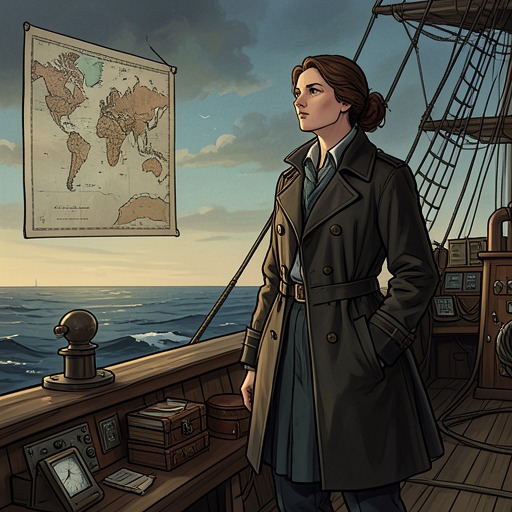
Corlys’s fame rested above all on nine great voyages aboard Sea Snake, the ship he designed and built himself. Traders from Oldtown and the Arbor had sailed as far as Qarth in search of valuable goods, but Corlys went beyond those established routes. On his first voyage in the ship, he passed through the Jade Gates to Yi Ti and the isle of Leng. The cargo of silk and spice he brought home was so rich that it doubled House Velaryon’s wealth at a stroke.
His second voyage carried him farther east, to Asshai-by-the-Shadow. The account says that he became the first Westerosi to reach the bleak city; if the tales are true, he lost his love and half his crew there. In Asshai’s harbor, he also saw an old, weathered ship that he would insist was Sun Chaser. That sight links his farthest travels to an earlier Westerosi voyage, but the account preserves it as a claim he made, not a certainty.
On his third voyage, Corlys turned toward the Shivering Sea. He became the first Westerosi to navigate the Thousand Islands and visit the cold shores of N’ghai and Mossovy. These routes made his reputation not merely a matter of carrying goods farther than his rivals: his journeys pushed the boundaries of what Westerosi sailors were known to have seen.
The ninth voyage returned to Qarth. Sea Snake sailed home laden with enough gold to buy twenty more ships and stock them with saffron, pepper, nutmeg, elephants, and fine silk. The expedition came at a cost: only fourteen ships in the fleet reached Driftmark safely, and every elephant died at sea. Even so, the profits were immense. House Velaryon briefly became the richest house in the Seven Kingdoms, surpassing even the Hightowers and Lannisters. By the time Corlys married, at thirty-seven, he had returned from his voyages and come home to build a family. He told Princess Rhaenys that only she could have drawn him away from the sea, and that he had returned from the ends of the earth for her.
Succession and political ambition
In 90 AC, Corlys and Rhaenys married, joining the Sea Snake’s wealth and influence to the Targaryen princess’s claim. The marriage was among the last happy occasions shared by King Jaehaerys and Queen Alysanne. Corlys’s ambitions were also shaped by an earlier succession decision: after Prince Aemon died, Jaehaerys bypassed Aemon’s daughter, Rhaenys, in favor of his brother Baelon. Corlys bitterly regretted that choice. When the lords gathered at Harrenhal, he and Rhaenys arrived in great state and used Velaryon wealth and influence to argue that their son Laenor should be recognized as heir to the Iron Throne. Boremund Baratheon and several other lords supported their effort.
Corlys’s sea power also gave him a role in conflicts beyond the royal succession. Determined to end the Triarchy’s rule over the Stepstones, he formed an alliance with Daemon Targaryen, who sought the gold and glory a war might bring. They planned their campaign at High Tide on Driftmark: Corlys would command the fleet and Daemon the army. Their opponents, the forces of the Three Daughters, outnumbered them, but Daemon brought Caraxes into the fight. The partnership reflected Corlys’s characteristic strength as a political and military actor: he could supply ships and command, then join them to the ambitions of a prince with a dragon.
The Dance and his service to Rhaenyra
By the time Rhaenyra’s cause entered the Dance of the Dragons, Corlys was old but remained committed to the fight. He pledged his strength at the black council alongside Rhaenys, whose resolve remained undiminished. Rhaenyra’s resources were otherwise strained, but the wealth of House Velaryon and Corlys’s fleet gave her a substantial advantage at sea. When the war’s leaders agreed on their next moves, Daemon was to attack Harrenhal, while Corlys commanded the fleet closing the Gullet and blocking shipping into and out of Blackwater Bay. Rhaenys would fly overhead to deter dragon attacks on the ships. The plan depended on the Velaryons not only as a house with political influence, but as a naval force able to constrain the enemy’s movement.
That alliance was tested after Rhaenys died at Rook’s Rest. When word reached Dragonstone, Corlys blamed Rhaenyra for leaving his wife to answer the call and forbidding her sons to accompany Rhaenys. His anger exposed the human cost beneath the political partnership. Jacaerys soon brought him back into the queen’s service by naming him Hand of the Queen, and the two began planning an assault on King’s Landing.
As Hand, Corlys urged Rhaenyra to seek terms with Lords Baratheon, Hightower, and Lannister: if they bent the knee, swore fealty, and gave hostages, he advised, they should be pardoned. He proposed that the Faith take charge of Dowager Queen Alicent and Queen Helaena, and that Jaehaera become his ward and eventually marry Aegon the Younger, binding the divided branches of House Targaryen together. Rhaenyra objected to extending such mercy to her half-brothers, whom she held responsible for taking her throne and killing her sons. Corlys’s proposal did not erase that grievance; it set out a political alternative to letting it dictate the settlement.
He also defended the dragonseeds when their loyalty came under suspicion. Corlys maintained that Addam Velaryon and Alyn were true Velaryons and worthy heirs to Driftmark. He spoke in defense of Nettles as well, pointing to her bravery at the Battle of the Gullet despite her humble appearance. Rhaenyra’s order to arrest Addam instead led to his escape and Corlys’s own imprisonment. Accused of treachery, the old lord did not deny it. Bound and beaten, he was taken to a black cell to await trial and execution. His captivity weakened the queen’s position: Velaryon men deserted her by the hundreds, and two of Corlys’s sworn swords attempted to free him.
Pardon, peace, and death
After Rhaenyra’s death, Corlys remained central to the struggle over what should follow. Though Aegon II’s side sought to secure the realm, Corlys judged further war futile. He argued that the Crown should pardon those who had fought for Rhaenyra, proclaim Aegon the Younger heir, and marry him to Jaehaera. Later, he again urged honorable terms for the great houses, observing that children now occupied seats whose former lords had died in battle. His repeated answer to continued bloodshed was negotiation: not because the sides had no grievances, but because their leaders and armies had already paid so heavily for them.
The Judgment of the Wolf brought Corlys’s own wartime actions before Cregan Stark. Tried alongside Larys Strong, Corlys did not deny his guilt, maintaining that he had acted for the good of the realm and would do so again because the madness had to end. Cregan declared both men guilty of murder, regicide, and high treason, and condemned them to die. Aegon III nevertheless spared the Sea Snake and restored him to his offices and honors, including a place on the small council. The reprieve returned to public service a man whose conduct had been condemned in law but whose political judgment remained valuable to the new reign.
On the sixth day of the third moon in 132 AC, Corlys collapsed while climbing the winding steps in the Red Keep. By the time Grand Maester Munkun reached him, the seventy-nine-year-old Sea Snake was dead. He had served four kings and a queen, sailed to the farthest reaches known to Westerosi sailors, raised House Velaryon to exceptional wealth and power, and fathered dragonriders. He had also built towns and fleets and served in both war and peace. His body lay in state beneath the Iron Throne for seven days, then was carried to Driftmark aboard Mermaid’s Kiss, captained by Marilda of Hull with her son Alyn. The battered hull of Sea Snake was refloated and towed into deep water east of Dragonstone; Corlys was buried at sea aboard the vessel that had given him his name. The tale that the Cannibal flew above the sinking ship in salute was later judged likely embellishment. The burial’s enduring image is instead the ship itself: the instrument of his fame, the source of his house’s fortune, and his final resting place.